
Understanding Pain in hEDS: Mechanisms, Evidence-Based Treatment, and the Role of Occupational Therapy

Living with hypermobile Ehlers-Danlos syndrome (hEDS) means navigating a daily reality where pain, fatigue, and instability are frequent companions. But there’s real hope: research-backed, practical strategies (especially those offered by occupational therapy) can help you reclaim comfort, function, and independence.

Why Does Pain Happen in hEDS?

Compensatory Muscle Engagement & Myofascial Spasm
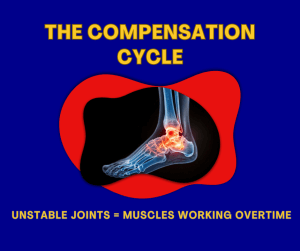
When connective tissue is too lax, muscles must work overtime to stabilize hypermobile joints. This leads to a cycle of overuse, fatigue, and pain, often described as aching, throbbing, or stiffness. Myofascial spasm in response to chronic joint instability is a pain driver, especially in the spine and paravertebral muscles, where tender points and spasm are common. This pattern can resemble fibromyalgia, with both nociceptive (tissue) and neuropathic (nerve) pain present (Hakim, 2024).
 
Recent studies show that this compensation isn’t limited to local muscles. People with hEDS use more muscle activation and antagonist coactivation, especially during walking, shifting work to larger, more proximal muscles. This increases energy demands and leads to exercise intolerance (Sheehan et al., 2025).
unstable joints = muscles working overtime

Central Sensitization & Widespread Pain

Ongoing pain signals from unstable joints can trigger central sensitization in the nervous system, causing widespread pain that extends beyond the original site. This “amplification” of pain is well-documented in hEDS, with enhanced pain responses confirmed in research (Di Stefano et al., 2016; De Wandele et al., 2022).

Impaired Proprioception & Muscle Weakness

Reduced proprioceptive feedback (your body’s sense of joint position) and muscle weakness force the body to rely even more on compensatory strategies, perpetuating the pain and instability cycle (Syx et al., 2017).
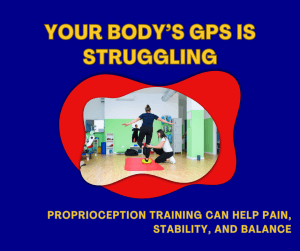
body's gps is struggling: proprioception training can help

What Works for Pain in hEDS?

Pain Neuroscience Education (PNE)
Combining pain neuroscience education with exercise is supported by moderate-quality evidence for reducing pain and improving function in chronic musculoskeletal conditions, and emerging research shows specific benefit in hEDS. PNE helps you understand how pain works, reduces fear of movement, and empowers you to break the pain cycle. Notably, programs that include pain education have shown significant improvements in pain, pain-related disability, and kinesiophobia (fear of movement) in hEDS (Celletti et al., 2021; Chew et al., 2025; Siddall et al., 2022).

Proprioceptive Training

Proprioceptive training (exercises that enhance your awareness of joint position and movement) consistently improves balance, confidence, and quality of life in hEDS. Comprehensive rehab programs that include proprioceptive and motor function training produce lasting improvements in exercise capacity, balance, and daily function (Reychler et al., 2021; Garreth Brittain et al., 2024; Hakimi et al., 2023). At TCS, we integrate proprioceptive training into every treatment plan, tailoring activities to your unique needs and goals.

Biofeedback and Parasympathetic Activation

While direct evidence is still emerging, biofeedback is a promising tool for helping clients engage deep stabilizing muscles and develop greater body awareness. Parasympathetic activation techniques, such as nervous system drills, breathwork, and vagus nerve activities, have demonstrated significant improvements in mental quality-of-life and pain reduction. These low-risk, practical strategies are routinely included in our OT sessions to support nervous system regulation and decrease neuroplastic (central) pain (Lattimore & Harrison, 2023).

Multidisciplinary & Occupational Therapy Interventions

OT is a cornerstone of hEDS management. Evidence supports OT’s role in improving independence, function, and quality of life through:
  • Environmental modifications: Adapting home and work spaces to reduce strain, conserve energy, and support safe movement (e.g., ergonomic workstations, wide-grip utensils, suitable mattresses, mobility aids) (Hakim, 2024; Minhas, 2021; Yew et al., 2021).
  • Self-management strategies: Education on pacing, joint protection, and activity modification tailored to your daily life.
  • Assistive devices: Recommendations for wheelchairs, scooters, soft collars, and other supports as needed.
  • Enablement and behavioral change: Clients consistently prioritize OT-led adaptations and practical support as the most important interventions for maintaining independence (Bennett et al., 2022).
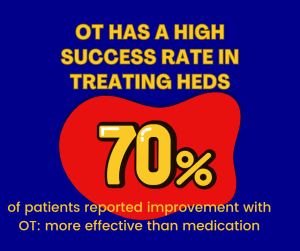
In a study of 98 hEDS patients, OT and bracing had the highest reported rates of improvement (70%), surpassing physical therapy, medications, and complementary treatments (Song et al., 2020).

Why TCS?

TCS’s OT team is committed to evidence-based, client-centered care. We blend pain neuroscience education, proprioceptive and motor training, environmental enablement, and nervous system regulation into every plan. Our approach is practical, flexible, and always tailored to your needs—because living well with hEDS is possible, and you deserve support that works.

References

Bennett, S. E., Walsh, N., Moss, T., & Palmer, S. (2022). Developing a self-management intervention to manage hypermobility spectrum disorders (HSD) and hypermobile Ehlers-Danlos syndrome (hEDS): An analysis informed by behaviour change theory. Disability and Rehabilitation, 44(18), 5231-5240. https://doi.org/10.1080/09638288.2021.1933618
 
Celletti, C., Paolucci, T., Maggi, L., Petrarca, M., Erra, C., Iosa, M., Moriconi, S., Cambieri, C., Bragatto, M., Marvulli, R., Galeoto, G., Castori, M., & Saraceni, V. M. (2021). Pain management through neurocognitive therapeutic exercises in hypermobile Ehlers-Danlos syndrome patients with chronic low back pain. BioMed Research International, 2021, 6664864. https://doi.org/10.1155/2021/6664864
 
Chew, M. T., Ilhan, E., Nicholson, L. L., Pacey, V., Tofts, L., Coda, A., & Schreiber, J. (2025). HOPE for hypermobile Ehlers-Danlos syndrome (hEDS) and hypermobility spectrum disorder (HSD)—A pilot randomised controlled trial of feasibility, acceptability and appropriateness. European Journal of Pain, 29(6), e70030. https://doi.org/10.1002/ejp.70030
 
De Wandele, I., Colman, M., Hermans, L., Stoop, N., Rombaut, L., & Calders, P. (2022). Exploring pain mechanisms in hypermobile Ehlers-Danlos syndrome: A case-control study. European Journal of Pain, 26(6), 1355-1367. https://doi.org/10.1002/ejp.1956
 
Di Stefano, G., Celletti, C., Baron, R., Castori, M., Di Franco, M., La Cesa, S., Leone, C., Pepe, A., Cruccu, G., & Truini, A. (2016). Central sensitization as the mechanism underlying pain in joint hypermobility syndrome/Ehlers-Danlos syndrome, hypermobility type. European Journal of Pain, 20(8), 1319-1325. https://doi.org/10.1002/ejp.856
 
Garreth Brittain, M., Flanagan, S., Foreman, L., & Teran-Wodzinski, P. (2024). Physical therapy interventions in generalized hypermobility spectrum disorder and hypermobile Ehlers-Danlos syndrome: A scoping review. Disability and Rehabilitation, 46(10), 1936-1953. https://doi.org/10.1080/09638288.2023.2216028
 
Hakim, A. (2024). Hypermobile Ehlers-Danlos syndrome. In M. P. Adam, J. Feldman, G. M. Mirzaa, R. A. Pagon, S. E. Wallace, L. J. H. Bean, K. W. Gripp, & A. Amemiya (Eds.), GeneReviews®. University of Washington, Seattle. https://www.ncbi.nlm.nih.gov/books/NBK1279/ (Original work published 2004)
 
Hakimi, A., Bergoin, C., De Jesus, A., Peyronnet, C., Regnaux, J. P., Rannou, F., Nguyen, C., & Palazzo, C. (2023). Multiple sustainable benefits of a rehabilitation program in therapeutic management of hypermobile Ehlers-Danlos syndrome: A prospective and controlled study at short- and medium-term. Archives of Physical Medicine and Rehabilitation, 104(12), 2059-2066. https://doi.org/10.1016/j.apmr.2023.06.012
 
Lattimore, P., & Harrison, F. (2023). Pilot study of an online-delivered mindfulness meditation in Ehlers-Danlos syndrome (hEDS): Effect on quality-of-life and participant lived experience. Disability and Rehabilitation, 45(23), 3833-3840. https://doi.org/10.1080/09638288.2022.2140843
 
Minhas, D. (2021). Practical management strategies for benign hypermobility syndromes. Current Opinion in Rheumatology, 33(3), 249-254. https://doi.org/10.1097/BOR.0000000000000798
 
Reychler, G., De Backer, M. M., Piraux, E., Poncin, W., & Caty, G. (2021). Physical therapy treatment of hypermobile Ehlers-Danlos syndrome: A systematic review. American Journal of Medical Genetics Part A, 185(10), 2986-2994. https://doi.org/10.1002/ajmg.a.62393
 
Sheehan, D. S., Oliemans, J. P., Golden, D. W., Krzak, J. J., Flanigan, D. C., & Siston, R. A. (2025). To what extent do the muscles and tendons influence metabolic cost and exercise tolerance in the hypermobile Ehlers-Danlos syndrome and hypermobility spectrum disorders? Clinical Biomechanics, 131, 106695. https://doi.org/10.1016/j.clinbiomech.2025.106695
 
Siddall, B., Ram, A., Jones, M. D., Booth, J., Perraton, L., Pua, Y. H., Hübscher, M., Wand, B. M., Cashin, A. G., McAuley, J. H., & Moseley, G. L. (2022). Short-term impact of combining pain neuroscience education with exercise for chronic musculoskeletal pain: A systematic review and meta-analysis. Pain, 163(1), e20-e30. https://doi.org/10.1097/j.pain.0000000000002308
 
Song, B., Yeh, P., Nguyen, D., Winters, R., Vangsness, C. T., Jr., & Hatch, G. F., III. (2020). Ehlers-Danlos syndrome: An analysis of the current treatment options. Pain Physician, 23(4), 429-438.
 
Syx, D., De Wandele, I., Rombaut, L., & Malfait, F. (2017). Hypermobility, the Ehlers-Danlos syndromes and chronic pain. Clinical and Experimental Rheumatology, 35(Suppl. 107), 116-122.
 
Wang, T. J., Stecco, A., Hakim, A. J., & Schleip, R. (2025). Fascial pathophysiology in hypermobility spectrum disorders and hypermobile Ehlers-Danlos syndrome: A review of emerging evidence. International Journal of Molecular Sciences, 26(12), 5587. https://doi.org/10.3390/ijms26125587
 
Yew, K. S., Kamps-Schmitt, K. A., & Borge, R. (2021). Hypermobile Ehlers-Danlos syndrome and hypermobility spectrum disorders. American Family Physician, 103(8), 481-492.

Share this post on social media

Facebook
Twitter
LinkedIn
Scroll to Top